Osmo Action First Look: Unboxing and Impressions
Introduction
The Osmo Action arrived as a serious challenger in the action camera market, aiming to appeal to travelers, vloggers, cyclists, motorcyclists, hikers, and anyone who wants stabilized footage in a compact, rugged body. At first glance, it is clear that this camera was designed to compete in a category where buyers care deeply about a few core things: image stabilization, ease of use, mounting flexibility, battery life, durability, audio quality, and whether the camera can keep up with fast-moving, real-world shooting.
This first look at the Osmo Action focuses on exactly those priorities. Rather than treating it as a spec sheet exercise, the goal is to evaluate what the camera feels like during the unboxing process, how thoughtful the hardware appears in hand, and whether the early impressions suggest that it can perform well for the kinds of people who actually buy action cameras. From commuting and family travel to mountain biking, snorkeling, road trips, and behind-the-scenes content creation, the Osmo Action positions itself as a versatile tool rather than a niche gadget.
What makes the Osmo Action particularly interesting is that it tries to balance ruggedness with usability. Many small cameras are technically powerful but awkward to operate once mounted to a helmet, chest rig, handlebar, or selfie stick. Early impressions matter in this category because design decisions become obvious immediately: button placement, screen visibility, menu clarity, battery access, and how secure the mounting system feels. In that sense, the unboxing experience is more than presentation; it is the first test of whether the product seems genuinely ready for field use.
Unboxing Experience and First Impressions
Opening the package, the Osmo Action gives off the kind of impression buyers generally want from a premium electronics product: compact, cleanly organized, and focused on practical essentials. The camera itself is naturally the center of attention, but the broader unboxing experience also reveals the philosophy behind the device. The emphasis is on getting the user shooting quickly rather than overwhelming them with unnecessary extras.
In the box, buyers can typically expect the camera, battery, mounting frame or protective housing setup depending on the kit, charging cable, adhesive mounts or basic accessories, and printed documentation. Even before powering it on, the camera communicates a utilitarian purpose. It feels built to be used outdoors rather than simply admired on a desk.
The first physical impression is usually the most important with an action camera, and here the Osmo Action performs well. The body feels dense without being heavy, and the materials suggest impact resistance and weather-ready construction. The edges are firm and practical, while the buttons feel substantial enough to use with wet fingers or gloves. That matters more than it may seem. Action cameras are often used in cold weather, on the move, or in situations where quick operation matters. A camera that is too sleek or too delicate can become frustrating immediately.
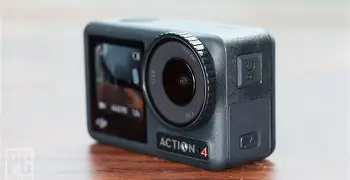
One of the standout design choices is the presence of a front-facing screen. For vloggers and solo creators, this is an instant advantage. It makes framing much easier when speaking to camera, recording travel updates, or capturing clips for social content. Even for buyers who do not think of themselves as vloggers, the convenience is significant. A front screen reduces guesswork and cuts down on wasted clips, particularly when using a short handheld mount.
The rear touchscreen also makes a strong first impression. Menus appear designed for speed, with an interface that feels modern and relatively approachable. Buyers who have used older action cameras with clunky navigation will likely appreciate how much difference a clean touchscreen experience can make. Whether adjusting resolution, frame rate, stabilization, or switching between photo and video modes, the early usability seems aimed at reducing friction.
Design, Build Quality, and Everyday Handling
The Osmo Action’s design feels purpose-built for active use. Its compact square-like body is easy to stash in a jacket pocket, small pouch, or tank bag, which is a major advantage for people who travel light. More importantly, it looks and feels like a device that can be mounted and remounted repeatedly without becoming annoying to handle.
For many buyers, the real test of design is not aesthetics but workflow. Can the battery be swapped quickly before a ski run or cycling session? Is the camera easy to mount securely before leaving the car? Are the ports and doors reassuringly tight? Does the screen remain visible in bright conditions? On first inspection, the Osmo Action appears to understand those concerns. Its doors and seals feel purposeful, and the structure seems durable enough for the rough handling that action cameras inevitably face.
The lens area is prominent but protected enough to inspire confidence. This is particularly important because buyers often use action cameras in environments where sand, dust, road spray, water droplets, and accidental bumps are common. No action camera is invincible, but confidence in build quality goes a long way toward making users actually bring the camera along instead of leaving it at home.
Button placement also deserves credit. Dedicated physical controls matter because touchscreens are not always convenient in motion or wet conditions. The Osmo Action strikes a sensible balance between touchscreen convenience and tactile hardware control. That combination can be especially helpful for motorcyclists, cyclists, and snowboarders who need to start recording quickly without diving into menus.
Display and Interface Impressions
The dual-screen arrangement is arguably one of the camera’s most buyer-friendly features. The front display is not just a flashy addition; it changes how the camera can be used. Travel creators, fitness instructors, and solo reviewers can frame themselves more accurately, while casual users can simply avoid cutting off their face or horizon line during handheld clips.
Discover deals on Electronics — updated daily.
See Deals →The rear screen feels like the command center of the experience. A responsive touchscreen can make an enormous difference on a small camera, and the Osmo Action’s interface appears geared toward fast changes. For users switching between slow-motion clips, standard travel footage, and quick stills, that ease of access matters. Nobody wants to miss a jump, a child’s reaction, or a wildlife moment because the camera menu is too slow or confusing.
Brightness and outdoor visibility are also central concerns. Action cameras are frequently used under harsh midday sunlight, where some displays become difficult to read. While long-term testing is necessary for a final verdict, the early impression is that the screen is bright enough to be workable in most outdoor conditions. That alone makes operation more reliable when composing shots on hikes, beaches, roadsides, or trails.
Video Features and Image Quality Expectations
No first look would be complete without addressing what matters most: footage quality. Buyers in this segment generally care less about abstract camera jargon and more about whether the video looks sharp, stable, and believable in mixed conditions. They want a camera that can handle bright daylight, moving subjects, and everyday unpredictability without demanding constant adjustments.
Early impressions suggest the Osmo Action was built with those expectations in mind. It aims to deliver crisp video with enough detail and contrast to satisfy both casual users and more serious creators. In favorable lighting, footage should look vibrant and clean, with the kind of punch that works well for travel clips, outdoor adventures, and general lifestyle recording.
Color rendering is often a point of discussion with compact cameras. Some users prefer highly saturated footage straight out of camera, while others want a flatter base for editing. The Osmo Action appears tuned toward an appealing consumer-friendly look, which makes sense for the majority of buyers. People shooting vacations, bike rides, water sports, or city walks usually want footage that already looks good without spending hours color grading.
Low-light performance is where action cameras traditionally struggle, and buyers should always keep realistic expectations. A small sensor cannot match the night performance of a larger mirrorless camera or premium smartphone in every situation. That said, what matters is whether the Osmo Action remains usable during dusk walks, cloudy forest trails, indoor scenes, or evening street footage. If it can preserve decent detail and avoid excessive noise or smearing, that will be more meaningful to everyday users than marketing promises.
Stabilization and Real-World Use Cases
For many people, stabilization is the feature that determines whether an action camera earns a place in their kit. A camera may have sharp resolution and a durable body, but if the footage is too shaky to watch comfortably, its real-world value drops quickly. The Osmo Action makes stabilization one of its core selling points, and that is exactly where early buyers will focus their attention.
In practical terms, good stabilization matters across a wide range of scenarios:
- Walking tours while traveling through busy streets or landmarks
- Handlebar-mounted footage for cycling and mountain biking
- Helmet or chest-mounted clips during skiing, snowboarding, or trail running
- Handheld vlog segments recorded while moving between locations
- Family outings, amusement parks, and casual day trips where smooth footage adds polish
If the stabilization performs as expected, the Osmo Action could be particularly appealing to buyers who want smooth footage without carrying a separate gimbal. That convenience factor is substantial. A single, pocketable camera that can handle movement well often gets used more often than a more complicated setup.
Audio, Battery, and Practical Concerns
Beyond video quality, buyers usually care about three everyday realities: can they hear the footage clearly, how long will the battery last, and is the camera annoying to manage over time? These practical details often decide whether a product feels polished.
Audio on action cameras is always a compromise because of size, weather sealing, and exposure to wind. Still, the Osmo Action appears to be designed with the understanding that many owners will record spoken clips, roadside commentary, travel notes, and ambient scenes. Built-in microphone quality will likely be acceptable in calmer conditions, though wind remains an expected challenge outdoors. For vloggers and reviewers, accessory support and mounting options will matter if audio is a priority.
Battery performance is another major purchase factor. Buyers want enough runtime for a morning outing, a half-day excursion, or multiple short clips throughout a trip without constant recharging. The ability to swap batteries quickly is especially important for road travel, hiking, motorsports, and all-day events. First impressions of the battery compartment and overall design suggest the camera is aware of this need for speed and convenience.
Heat management also deserves mention. Compact cameras recording high-resolution stabilized video can generate heat, and users care about whether a device can maintain performance during longer sessions. While a first look cannot replace long-form stress testing, the Osmo Action seems oriented toward real use, not just short demo clips. That distinction matters for buyers who intend to record extended rides, scenic routes, or ongoing activity.
Shop the latest Electronics picks on Amazon.
View Offers →Pros and Cons
Pros
- Front-facing screen makes self-recording and vlogging noticeably easier
- Compact, rugged body feels well suited to travel, outdoor use, and mounting
- User-friendly touchscreen interface helps reduce setup friction
- Strong emphasis on stabilization is valuable for handheld and action footage
- Quick-access physical controls are helpful in gloves, wet conditions, or fast-moving scenarios
- Portable form factor encourages everyday carry and spontaneous use
Cons
- Low-light limitations are still likely compared with larger cameras
- Built-in audio may struggle in windy outdoor environments
- Small-body ergonomics can be less comfortable for long handheld shooting without an accessory grip
- Battery life may require spares for all-day adventure use
- Action camera image style may not satisfy buyers looking for a more cinematic large-sensor look
Osmo Action at a Glance
| Category | Early Impression | Why It Matters to Buyers |
|---|---|---|
| Build Quality | Solid, rugged, confidence-inspiring | Important for travel, sports, and unpredictable outdoor use |
| Ease of Use | Strong first impression thanks to touchscreen and button layout | Helps users capture moments quickly without menu frustration |
| Front Screen | One of the most practical standout features | Useful for solo creators, vloggers, and framing self-shot video |
| Stabilization | Promising and central to the product’s appeal | Critical for smooth footage while walking, riding, or mounting the camera |
| Portability | Excellent | Easy to carry daily or pack for trips and outdoor adventures |
| Audio | Likely usable, but situational outdoors | Important for spoken clips and ambient recording |
| Battery Practicality | Appears user-conscious, especially with swap-friendly design | Essential for day trips, sports sessions, and travel |
How It Compares to What Buyers Usually Want
The average buyer shopping for an action camera is rarely looking only for maximum resolution. More often, they want a camera that solves a problem: a smartphone is too fragile, too hard to mount, or too awkward to use in motion. The Osmo Action makes sense when viewed through that lens. It appears designed to be the camera that can go where a phone should not.
For travelers, the appeal lies in portability and quick startup. For cyclists and motorcyclists, it is about stable video and mounting confidence. For parents, it can be a durable camera for vacations, theme parks, and water activities without the anxiety of exposing a primary phone. For vloggers, the front screen alone may tip the decision.
Compared with what buyers generally expect in this category, the Osmo Action’s strongest early advantage is the feeling that it was designed for usability rather than just raw specifications. In electronics, that distinction often separates products that reviewers admire from products that owners actually enjoy using.
Buying Guide: Who Should Consider the Osmo Action?
The Osmo Action is best suited to buyers who want a durable, flexible camera for motion-heavy or outdoor environments. It is not necessarily the right choice for every content creator, but it can be a very compelling option for several types of users.
Best for Travel and Adventure Users
Travelers who want a lightweight camera for hikes, city walks, beaches, road trips, and scenic footage should find the Osmo Action attractive. Its small footprint makes it easier to carry all day, and its rugged design reduces the stress of using it in changing conditions.
Best for Solo Creators and Vloggers
Creators filming themselves while walking, talking, or demonstrating products will appreciate the front-facing screen. It simplifies framing and adds confidence during handheld or tripod-mounted recording. For someone producing quick travel diaries, fitness updates, or behind-the-scenes clips, that convenience can be a deciding factor.
Best for Sports and Mounting Applications
Cyclists, skiers, riders, paddlers, and runners tend to care most about stabilization, durability, and mounting security. If those are the priorities, the Osmo Action looks well aligned with that audience. A stable image and reliable physical design matter more here than advanced manual settings.
Less Ideal for Low-Light Specialists
Buyers who primarily shoot indoors, at night, or in carefully controlled cinematic environments may want to think carefully. Action cameras shine in bright, active scenarios. Those seeking the richest low-light performance or shallow depth of field will generally be better served by a larger camera system.
What to Check Before Buying
- Accessory ecosystem: Make sure the mounts and add-ons needed for helmets, bikes, cars, or travel kits are readily available
- Battery needs: Consider whether spare batteries are necessary for long outings
- Editing workflow: High-resolution action footage can require storage space and a reasonably capable device for editing
- Audio expectations: If spoken audio is crucial, plan around wind conditions or external audio solutions where possible
- Use environment: This camera makes the most sense when durability, stabilization, and portability are higher priorities than low-light excellence
Final Thoughts
As a first impression, the Osmo Action comes across as a thoughtfully designed action camera that understands what its target audience actually needs. It feels rugged, practical, easy to operate, and especially compelling for buyers who value stabilization and self-recording convenience. The front screen is more than a headline feature; it materially improves how the camera fits into modern travel, vlogging, and everyday capture.
Its limitations are the familiar ones associated with the category: low-light performance will never be its strongest selling point, battery planning still matters, and audio outdoors is always a challenge for compact cameras. But within the role it is meant to fill, the Osmo Action makes a strong early case for itself.
For shoppers looking for a compact camera that can handle motion, weather, and on-the-go shooting without becoming cumbersome, the Osmo Action leaves a favorable first impression. It looks like the kind of electronics product that earns its value not by sitting on a shelf, but by making it easier to capture moments that a phone or larger camera might miss.