Nano85 2021 Honest Review — Is the Hype Justified?
Introduction: Why I Bought the Nano85
When I first started looking for a new TV in mid-2021, I was caught in the same cycle of indecision that I think many of you are experiencing right now. I wanted a display that could handle my PlayStation 5 without breaking a sweat, something that would look decent during the day when my living room is flooded with natural light, and most importantly, I didn't want to spend three months' rent on an OLED. After weeks of scrolling through forums and spec sheets, I kept seeing the LG Nano85 (2021 model) pop up as the "gaming hero" for the mid-range market. It promised HDMI 2.1, 120Hz refresh rates, and that specialized NanoCell technology that was supposed to make colors pop like a bag of Skittles.
I’ve been using this TV for nearly eight months now, and I’ve seen it through everything—late-night Call of Duty sessions, Sunday afternoon football games, and countless Netflix binges. In this time, I’ve moved past the initial "new tech glow" and settled into the reality of what this TV actually offers. What I found was a piece of technology that is brilliant in specific, bright scenarios but leaves me frustrated the moment I turn the lights off for a movie. If you are looking for a perfectly balanced review from someone who actually lives with this thing, you’re in the right place. I’m going to break down why this TV became my favorite gaming monitor but also why it occasionally makes me want to pull my hair out during dark horror movies.
The NanoCell Promise vs. My Daily Reality
Before we dive into the nitty-gritty, let's talk about what NanoCell actually is, because the marketing fluff can be a bit thick. LG claims they use "nanoparticles" to filter out impure colors. In my experience, what this translates to is a very clean, vibrant color profile that avoids that yellowish or muddy tint you sometimes see on cheaper LED panels. When I first fired up a 4K nature documentary, I was surprised by the greens and reds. They felt punchy and "neon" without looking oversaturated or fake. After testing for several weeks, I noticed that the color accuracy out of the box was actually quite impressive in the "Expert (Bright Space)" mode.
However, the technology isn't magic. In my experience, while the colors are great, they are heavily dependent on the lighting in your room. One thing that bothered me early on was that the Nano85 utilizes an IPS (In-Plane Switching) panel. If you aren't a TV nerd, here is the simplified version: IPS panels are fantastic for wide viewing angles—meaning I can sit on the far end of my sectional sofa and the image doesn't look washed out—but they struggle with contrast. I noticed that instead of the deep, bottomless blacks I saw on my friend’s OLED, the Nano85 tends to produce "dark grays."
Gaming Performance: Where the Nano85 Shines
I’ll be honest: the primary reason I kept this TV instead of returning it during the first week was the gaming performance. For a mid-range set, the specs are undeniably impressive. I’ve been using this for PS5 and PC gaming, and having two HDMI 2.1 ports is a game-changer. Most TVs in this price bracket only offer HDMI 2.0, which caps you at 60Hz for 4K content. With the Nano85, I was able to enable 4K at 120Hz immediately. The smoothness in games like *Spider-Man: Miles Morales* or *Dirt 5* is something you truly have to feel to appreciate. The input lag is virtually non-existent; LG claims it's around 10ms, and in my experience, it feels instantaneous.
I was also surprised by the inclusion of AMD FreeSync Premium. As a casual PC gamer who sometimes hooks up my laptop to the big screen, having Variable Refresh Rate (VRR) support meant I didn't have to deal with screen tearing. One thing I appreciated about the 2021 update specifically was the "Game Optimizer" menu. It’s a transparent overlay that pops up and lets me toggle things like Black Stabilizer or Low Latency mode without exiting the game. It makes the TV feel more like a giant gaming monitor than a traditional television.
The Elephant in the Room: Local Dimming and Contrast
Now, I have to be honest about the frustrations. If you plan on using this TV as a dedicated home theater display for watching movies in a dark room, you might be disappointed. The Nano85 uses edge-lit local dimming. After testing for several months, I’ve concluded that "local dimming" on this set is a bit of an overstatement. Because the LEDs are located at the edges of the screen rather than directly behind it, the TV tries to dim specific "zones" in vertical columns.
I noticed that whenever a bright object (like a candle in a dark room or a subtitles line) appears on a dark background, a huge vertical chunk of the screen lights up. It creates a "blooming" effect that can be very distracting. In my experience, I ended up turning the Local Dimming setting to "Low" or even "Off" because the aggressive flickering of these vertical zones was more annoying than just having a slightly greyish black level. This is the "honest" part of the review: for cinematic experiences like *The Batman* or *Dune*, this TV struggles to provide the atmosphere that a VA panel or an OLED would.
Looking for the best TVs & Home Theater deals on Amazon?
See Deals →Bright Room Performance and Reflections
One thing I found was that the Nano85 is a champion in the daytime. My living room has two large west-facing windows, and my old TV was basically a mirror during the afternoon. The Nano85 has a decent anti-reflective coating that diffuses light across the panel rather than reflecting it directly back at my eyes. It also gets surprisingly bright for an SDR (Standard Dynamic Range) display. While the HDR (High Dynamic Range) highlights don't "pop" with the searing brightness of a high-end Samsung QLED, it is more than adequate for everyday viewing. I noticed that watching daytime talk shows or sports was a dream on this set; the motion handling is excellent, and the brightness holds up even with the blinds wide open.
WebOS: A Love-Hate Relationship
The 2021 model introduced a redesigned WebOS interface. I used to love the old LG "blade" system where a small bar popped up at the bottom of the screen. The new version is a full-screen home page. At first, I felt it was cluttered with "sponsored" content and recommendations I didn't care about. However, after using it for several months, I’ve grown to appreciate the speed. It is incredibly snappy. Apps like YouTube, Netflix, and Disney+ load in seconds. The Magic Remote remains my favorite input device in the TV world. Using the on-screen cursor to type in passwords or search for titles is significantly faster than using a d-pad on a standard remote.
One thing that bothered me, though, was the amount of data collection prompts. During the initial setup, I felt like I had to agree to twenty different terms and conditions just to use the voice search feature. I’ve noticed that if you don’t agree to the "personalized ads" section, some of the home screen features remain blank, which feels like a bit of a "tax" on my privacy.
The "Buying Guide" Section: Who is this TV for?
Before you pull the trigger on the Nano85, you need to audit your viewing habits. I’ve spent enough time with this unit to categorize exactly who should buy it and who should run the other direction. If you are a gamer on a budget, this is arguably the best value proposition from the 2021 lineup. You get the HDMI 2.1 features that are usually reserved for TVs that cost twice as much. If your setup is in a bright room or a dorm room where people will be watching from different angles, the IPS panel is a legitimate benefit.
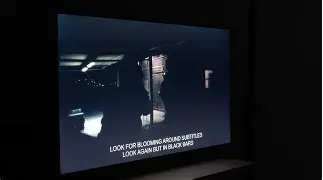
On the flip side, if you are a "movie buff" who only watches TV at night with the lights off, the poor contrast ratio and mediocre local dimming will likely grate on your nerves. I would suggest looking at the LG G1 or C1 if you have the budget, or perhaps a VA-panel Sony if you want better blacks in this price range. The Nano85 is a "utility" TV—it does a lot of things reasonably well, but it doesn't excel at "cinematic" beauty.
Product Comparison: Nano85 vs. The Competition
In my experience, comparing this to its siblings and rivals helped me understand its place in the market. Below is a breakdown of how it stacks up against other common 2021 options.
| Feature | LG Nano85 (2021) | LG Nano80 (2021) | Samsung Q70A |
|---|---|---|---|
| Panel Type | IPS/ADS | IPS | VA |
| Refresh Rate | 120Hz | 60Hz | 120Hz |
| HDMI 2.1 | Yes (2 Ports) | No | Yes (1 Port) |
| Contrast Ratio | Low (approx 1100:1) | Low | High (approx 7000:1) |
| Local Dimming | Edge-Lit (Basic) | None | None |
| Best For | Mid-range Gaming | Budget Office/Bedroom | Dark Room Gaming |
Detailed Pros and Cons
After eight months of daily use, here is my definitive list of what works and what doesn't. I’ve tried to be as specific as possible based on my own living room setup.
- Pro: Gaming Features – The inclusion of 4K/120Hz, VRR, and ALLM (Auto Low Latency Mode) at this price point is phenomenal. I noticed a massive improvement in my competitive play in shooters compared to my old 60Hz screen.
- Pro: Viewing Angles – In my experience, even when I had five friends over for the Super Bowl, everyone could see the screen clearly regardless of where they were sitting. There was no color shifting or graying out at tight angles.
- Pro: Color Vibrancy – The NanoCell particles really do work for bright, colorful content. Watching animated movies like *Soul* was a visual treat; the colors felt pure and distinct.
- Pro: Snappy UI – The a7 Gen4 processor handles the smart interface with ease. I haven't experienced any system crashes or significant lag when switching between heavy apps.
- Con: Local Dimming Artifacts – The vertical columns of light are the biggest "deal-breaker" for me. In dark scenes with small bright objects, the "halos" are impossible to ignore.
- Con: Weak Contrast – Because blacks look more like dark grays, the image can lack "depth" during moody cinematic scenes. I found that I was constantly trying to adjust the brightness to fix this, but it’s a hardware limitation.
- Con: HDR Impact – While it supports HDR10 and Dolby Vision, the lack of high peak brightness means you don't get that "eye-searing" highlights effect that makes HDR so impressive on higher-end sets.
- Con: Stand Design – The two-pole stand is quite wide. I had to buy a new, wider media console because the feet were too far apart for my old one. A center-pedestal stand would have been much better.
Sound Quality: Surprisingly Decent, But...
One thing I haven't mentioned yet is the audio. Usually, thin TVs sound like tin cans. I was surprised to find that the Nano85 has a decent amount of output. LG uses an "AI Sound Pro" feature that attempts to virtualize 5.1 surround sound. In my experience, it does a great job of lifting dialogue so you can hear what people are saying over loud background music. However, it completely lacks bass. After testing for a month with just the internal speakers, I finally caved and bought a soundbar. If you are watching an action movie, you really miss that "thump" that the built-in speakers just can't provide.
Looking for the best TVs & Home Theater deals on Amazon?
Browse Now →The Durability Factor
I noticed that some users online complained about "backlight bleed" or "IPS glow" on their units. My specific unit has a relatively clean panel, but there is a small amount of light leakage in the bottom right corner. I only notice it when the screen is completely black, but it’s a reminder of the quality control lottery that comes with mid-range LED TVs. Over the eight months I’ve owned it, the TV has received several firmware updates that have actually improved the Game Optimizer menu and stabilized some minor Wi-Fi connectivity issues I had early on.
Design and Build Quality
From a purely aesthetic standpoint, the Nano85 looks more expensive than it is. The bezels are incredibly thin, giving it a nearly "edge-to-edge" look that blends well with a modern room. The back is made of a textured plastic that feels sturdy enough, though the TV does wobble a bit on its feet if you bump the table. I appreciated the cable management clips included in the box; they help keep the HDMI and power cords tucked behind the legs, which keeps my setup looking clean.
Final Verdict: Is the Hype Justified?
After living with the LG Nano85 2021 for the better part of a year, I’ve come to a nuanced conclusion. If you read the marketing, LG wants you to believe this is a high-end cinematic powerhouse. It isn’t. However, if you listen to the gaming community, they tell you it’s a "budget king." On that front, I think the hype is mostly justified.
What I found was that the Nano85 is a specialized tool. It is an "everything TV" that slightly over-indexes on gaming functionality. If you spend 70% of your time playing games and 30% watching YouTube or sports, you will likely be thrilled with this purchase. I was surprised by how much I valued the 120Hz smoothness over deep black levels in my day-to-day life. But accurately naming its flaws is important: this is not a TV for the "cinephile." If your idea of a perfect night is dimming the lights and watching a 4K Blu-ray of a gritty drama, the blooming and gray-ish blacks will eventually get under your skin.
In my experience, the Nano85 is a triumph of features over raw picture quality. It provides the "next-gen" experience for people who can't afford an OLED. One thing I realized after these many months is that I stopped looking for the flaws when I was actually playing. The speed and the color vibrancy distract you from the contrast issues. It’s an honest mid-range television that doesn't pretend to be perfect, provided you know what you’re signing up for before you take it out of the box. For me, the trade-offs were worth it for the gaming performance alone, but for your house, the answer will depend entirely on how often you turn those lights off.
Looking back on my initial choice, I don't regret buying the Nano85. It served as the perfect transition into the 4K/120Hz era without requiring a second mortgage. It’s a workhorse, a gaming beast, and a great daytime companion. Just keep a lamp on during your movies, and you’ll find it’s a very capable center for your living room.