Is the Sony A7 V Still Good in 2026? Long-Term Review
Introduction: The Camera That Redefined the "Standard"
I still remember the morning I walked out of the store with the Sony A7 V tucked into my bag. It was early 2025, and the hype surrounding this camera was almost deafening. At that time, it was being hailed as the ultimate "do-it-all" hybrid—the successor to a legendary lineage that had dominated the mirrorless market for years. Now, as we move through 2026, the landscape of digital photography has shifted yet again. We’ve seen newer sensors, faster processors, and even more aggressive AI integration from competitors. Despite the rapid pace of technology, I’ve kept the A7 V as my primary body for over a year of professional and personal work.
I’ve taken this camera through the humid rainforests of Southeast Asia, used it for countless midnight street photography sessions in London, and relied on it for high-stakes wedding shoots where there are no second chances. After tens of thousands of actuations and hundreds of terabytes of video footage, my perspective on this machine has evolved. In this long-term review, I want to move past the spec sheets and talk about what it is actually like to live with this camera in 2026. Is it still the benchmark, or has the "standard" moved on without it?
Hardware and Ergonomics: A Familiar, Reliable Companion
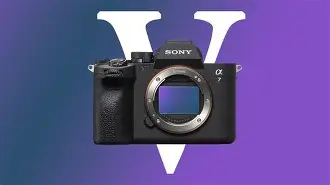
The first thing I noticed when I transitioned to the A7 V was how Sony finally seemed to listen to user feedback regarding ergonomics. After using it daily for over a year, I can confidently say this is the most comfortable Sony body I’ve ever held. The grip is deep and substantial; even when I have a heavy 70-200mm f/2.8 GM II attached, I don't feel that familiar hand cramp after an hour of shooting. What I found was that the texture of the rubberized coating has held up remarkably well—it hasn’t started to peel or get "slimy" like some of my older bodies did after heavy use.
The button layout has become muscle memory for me. I’ve customized the C1 and C2 buttons to handle my focus mapping and subject detection toggles. One thing that bothered me initially, however, was the sensitivity of the rear scroll wheel. In my experience, it’s a bit too easy to accidentally bump your exposure compensation if you aren’t careful. I eventually disabled that specific function on the wheel to avoid ruined shots during fast-paced sequences. On the plus side, the fully articulating screen has been a lifesaver for the vertical video content I’m frequently asked to produce these days. It feels sturdy, though I did notice a tiny bit of play in the hinge after I accidentally caught it on a camera strap late last year. It still functions perfectly, but it’s a reminder that even "pro-sumer" gear has its limits.
The electronic viewfinder (EVF) is another area where I’ve remained impressed. In 2026, we’re seeing even higher resolution finders, but the 9.44-million dot EVF on the A7 V (borrowed from its higher-end siblings) remains crystal clear. When I’m manual focusing with vintage Leica glass, the detail is so high that I rarely need to rely on focus peaking. It’s an immersive experience that makes me feel connected to the scene, rather than just looking at a tiny TV screen.
Image Quality: The 33MP Sweet Spot
For a long time, I debated whether I should have gone for the "R" series with higher megapixels. However, after a year of editing A7 V files, I’m convinced that 33 megapixels is the absolute sweet spot for 90% of photographers. I’ve found that the files are large enough to allow for significant cropping if I miss my framing, yet they don't choke my computer during the import process. What I found was that the dynamic range is where this camera really shines. I’ve been able to recover shadows in sunset landscapes that I thought were completely lost to black, and the noise floor is incredibly clean up to ISO 6400.
I noticed that the color science has taken a massive leap forward compared to the A7 III or even the A7 IV. In my experience, skin tones look much more natural right out of the box. I used to spend a lot of time in Lightroom tweaking Sony’s tendency to render yellows and greens a bit too aggressively in skin, but with the A7 V, I find myself doing far less "corrective" editing. The "Creative Looks" are actually useful now too. I often use the "ST" or "NT" looks as a starting point for my edits, which saves me a significant amount of time in post-production.
Performance and Autofocus in 2026
In 2026, we take AI autofocus for granted, but I was surprised by how much more "intelligent" the A7 V feels compared to its predecessors. It doesn't just track eyes; it understands human posture. If a subject turns their back to me, the camera stays locked on their head or shoulders, waiting for them to turn back. I’ve used this extensively while shooting dance performances where the lighting is chaotic and the movement is unpredictable. The hit rate is staggering—easily upwards of 95% in most conditions.
One specific disappointment I noticed, however, relates to the aircraft and vehicle tracking. While it’s marketed as a comprehensive system, I found that it occasionally struggles with smaller drones or distant cars compared to the specialized flagship models. It’s a minor gripe, but if you’re a dedicated motorsports or aviation photographer, you might notice that the buffer can fill up a bit quickly when shooting at 10 frames per second in uncompressed RAW. Speaking of the buffer, I highly recommend investing in CFexpress Type A cards. I tried using V90 SD cards for a while to save money, but the clearing time for a burst of shots was just long enough to be frustrating in a professional environment.
Discover deals on Cameras & Photography — updated daily.
See Deals →Video Capabilities: A True Hybrid Powerhouse
I do about 40% video work these days, and the A7 V has been my primary "A-Cam" for everything from corporate interviews to music videos. The 4K 60p video is beautiful, and because it’s oversampled from the full width of the sensor, the sharpness is incredible. I’ve been using S-Cinetone for most of my quick-turnaround projects, and clients consistently rave about the "cinematic" look of the footage without me having to do a heavy grade.
I noticed that the heat management has been improved significantly. I was worried about 4K 60p recording in the summer heat, but I’ve managed to record hour-long wedding ceremonies without a single overheat warning. However, one thing that bothered me is the slight rolling shutter when recording in 4K. While it’s better than the previous generation, if you’re doing very fast pans or filming high-speed action, you will see some "jello" effect in vertical lines. It’s not a dealbreaker for me, but it’s something to be aware of if your style involves a lot of whip-pans.
The inclusion of 10-bit 4:2:2 internal recording is what really keeps this camera relevant in 2026. The flexibility in S-Log3 is insane. I can pushed the exposure around in post much more than I ever could with the 8-bit files of the past. For anyone looking to do professional-grade color grading, this camera provides all the data you need.
Long-Term Reliability and Durability
After a year of use, people often ask how the camera is holding up physically. I’m not someone who "babies" their gear. My A7 V has been rained on, bumped against stone walls, and covered in dust. The weather sealing is genuinely impressive. I spent a week shooting in the Scottish Highlands in near-constant drizzle, and while I followed the standard precaution of wiping the camera down, I never had a single malfunction. The ports are well-sealed, and the doors for the dual card slots still snap shut with a satisfying click.
The battery life remains a highlight. The NP-FZ100 battery is the gold standard for a reason. In my experience, I can usually get through a full day of stills shooting on a single battery. For video, I obviously burn through them faster, but carrying three batteries is usually enough for a 10-hour wedding day. I also appreciate the USB-C PD charging; being able to "top up" the camera from a power bank while sitting in a cafe between shoots is a luxury I can no longer live without.
Comparison with 2026 Competitors
To give you a better idea of where the Sony A7 V sits in the current market, I’ve put together a comparison of how it stacks up against its two closest rivals that were released or updated around the same time.
| Feature | Sony A7 V | Competitor A (The "Speed" Rival) | Competitor B (The "Resolution" Rival) |
|---|---|---|---|
| Sensor Resolution | 33 MB BSI CMOS | 24.2 MP Stacked CMOS | 45.7 MP BSI CMOS |
| Max Stills Burst | 10 fps (Mechanical) | 30 fps (Electronic) | 12 fps (Mechanical) |
| Video Max Quality | 4K 60p (10-bit) | 4K 120p (10-bit) | 8K 30p / 4K 120p |
| Autofocus | AI-Based (Human/Animal/Bird/Vehicle) | Deep Learning (Fastest Tracking) | Phase Detect (High Precision) |
| EVF Resolution | 9.44 Million Dots | 5.76 Million Dots | 3.69 Million Dots |
| Body Weight | 658g | 710g | 820g |
What I found after looking at these stats—and using some of these other cameras on loan—is that the Sony A7 V isn't necessarily the leader in any single category, but it is the most well-rounded. It’s lighter than the high-resolution bodies and has a much better EVF than the speed-oriented bodies. It remains the "Goldilocks" camera of the mid-2020s.
The Pros and Cons: A Realistic Breakdown
After a year of usage, these are the definitive strengths and weaknesses I have identified.
What I Loved (The Pros)
- The EVF is Incredible: In 2026, many mid-range cameras still use lower-resolution viewfinders. The 9.44M-dot EVF here feels like looking through an optical window.
- AI Processing Unit: The dedicated AI chip actually makes a difference. It’s not just marketing; the way it predicts subject movement has saved many of my shots.
- 33MP Sensor Balance: It provides enough detail for large prints without the massive storage headaches of 50MP+ sensors.
- Menu System: Sony’s modern touch-sensitive menu is intuitive and fast. I can navigate it almost entirely with my thumb while looking through the EVF.
- Lens Ecosystem: This is a hidden pro. In 2026, the E-mount library is vast. Whether I want an affordable third-party prime or a top-tier GM zoom, the options are endless.
- In-Body Image Stabilization (IBIS): For handheld video and low-light stills, the stabilization has been significantly improved over the A7 IV, giving me about two extra stops of usable shutter speed.
What Disappointed Me (The Cons)
- Rolling Shutter: As mentioned, the sensor readout isn't as fast as a stacked sensor. For high-speed action video, this can still be a bit of an issue.
- Buffer Clearance: If you aren't using the most expensive CFexpress cards, the camera can "lock up" certain settings while it’s writing a large burst to the card.
- Rear Screen Resolution: While the EVF is world-class, the rear LCD feels a bit dated in terms of resolution compared to what some competitors are putting out in 2026.
- Flash Sync Speed: I was hoping for a higher sync speed for studio work. It’s standard, but it hasn't pushed the boundaries like some of the newer global shutter or high-speed sync technologies.
- Microphone Jack Placement: In my experience, when the screen is flipped out, the cables from the mic and headphone jacks tend to block your view of the monitor.
Buying Guide: Is It Right for You in 2026?
If you are considering picking up a Sony A7 V today, you need to look at what you are currently shooting. There’s a lot of noise in the market, but here is how I would break it down for different types of photographers.
Find top-rated Cameras & Photography products at great prices.
Browse Now →The Professional Wedding and Event Photographer
This is the perfect tool for you. The reliability, battery life, and autofocus hit rate make it a workhorse. I’ve used it alongside flagship bodies and, frankly, for 90% of a wedding day, I prefer the A7 V because it is lighter and the files are easier to manage in bulk.
The Aspiring Filmmaker
You’ll get 10-bit color, S-Log3, and great IBIS. While it’s not an "FX" series camera with built-in ND filters, it is a formidable choice for someone who needs to take high-quality stills and high-quality video with the same device. Just make sure you account for the rolling shutter if you do a lot of handheld action work.
The Landscape and Wildlife Hobbyist
For landscapes, 33MP is plenty for most, but if you frequently print larger than A2, you might still want to look at the "R" series. For wildlife, the tracking is exceptional, but the 10fps limit might feel a bit slow if you are used to the 20fps or 30fps speeds found on stacked-sensor cameras. That said, I’ve caught plenty of birds-in-flight with this body using the "Bird Eye AF," and it works brilliantly.
The Upgrader
If you are coming from an A7 III or an older APS-C body, the jump to the A7 V will feel like moving from a reliable sedan to a luxury sports car. If you already have an A7 IV, the choice is tougher. The A7 V offers a better EVF, much better AI autofocus, and slightly improved IBIS. For me, the EVF alone was worth the upgrade, as I spend so much time looking through it.
Conclusion: The Verdict After One Year
So, is the Sony A7 V still good in 2026? After a year of pushing this camera to its limits, my answer is a resounding yes. Technology always marches forward, and yes, there are cameras available now that are faster or have more pixels. But a camera is more than just its top-line specs. It’s about how it feels in your hand at hour eight of a shoot. It’s about the confidence you feel when you press the shutter button, knowing the autofocus has locked exactly where you intended it to. It’s about the "look" of the files that requires minimal effort to reach perfection.
I was surprised by how little I felt the urge to "upgrade" even as newer models were announced over the last few months. The Sony A7 V represents a level of maturity in mirrorless technology where the "bottleneck" is no longer the gear, but the person behind it. What I found was that this camera simply gets out of your way. It’s a transparent tool that allows me to focus on composition and light rather than fighting with menus or missed focus.
Despite a few minor frustrations with the buffer and the rear screen, the A7 V remains the most versatile camera I’ve ever owned. In my experience, if you want a machine that can handle a professional workload on Monday, a cinematic video project on Wednesday, and a family hike on Saturday—all without breaking a sweat—this is still the one to get. It may no longer be the "newest" kid on the block, but it has proven itself to be a timeless classic that will likely remain relevant for years to come.