8Bitdo Arcade Controller vs Narwal Flow Review: Performance, Price, and Verdict
I've been living with two very different gadgets for several months now: an 8Bitdo arcade-style controller for my fighting games and a Narwal Flow robot mop/vac for keeping the floors liveable between busy weeks. Both have their own personalities, strengths, and frustrations, and I wanted to write a thorough comparison I would have wanted before I bought either one. In this article I’ll share hands-on impressions, real-world performance notes, long-term reliability observations, and a buying guide to help you decide which — if either — belongs in your home.
Why I bought both
To be honest, my motivations were simple. I wanted the tactile satisfaction and precision of an arcade stick for local and online fighting-game sessions, and I wanted less floor maintenance in an apartment that gets tracked-in dust and the occasional pet hair. The 8Bitdo arcade controller promised nostalgic controls with modern connectivity, and the Narwal Flow sold itself on an automated mopping system with a self-washing dock. After using both daily for months, here’s what I found.
8Bitdo Arcade Controller — My detailed review
First impressions and build quality
Right out of the box I appreciated the weight and solid feel of the controller. The case was heavier than the plastic pads I’d used and felt like it would sit firmly on a lap or a table without skittering. The face buttons have a satisfying click that reminded me of arcade microswitches — firm, quick rebound, and clearly tactile. The joystick is stiff enough to avoid accidental inputs but light enough to execute quarter-circle motions without effort.
One thing I appreciated was the attention to finish: the paint and the seams were neat, and there was minimal plastic binding on the edges. I noticed one small paint blemish near the screw post on my unit — not a dealbreaker, but something I would expect to vary between units.
Connectivity and compatibility
I've used this controller wired on PC and Switch, and Bluetooth with a laptop and Android phone. Switching between wired and wireless was straightforward and mostly reliable. In my experience the Bluetooth pairing was simple and it remembered device profiles well. When I moved from a wireless PlayStation pad to the 8Bitdo for rollback-netcode matches, I had no perceptible input delay over a local wired USB connection. On Bluetooth I noticed occasional micro-hiccups during very long sessions, but nothing that affected tournament play — I simply defaulted to wired for sessions where every millisecond mattered.
Performance in games
What I found was that the stick’s responsiveness and the buttons' actuation let me chain combos more cleanly than any compact pad I'd used. Execution on games like Street Fighter-style titles felt crisp: the joystick’s gate and throw were well balanced, and the buttons returned quickly with minimal bounce. I was surprised by how much the physical layout helped my inputs — palm position and button spacing felt natural to my hands.
After several months of daily use, the buttons remained consistent. I did notice a tiny bit of side-to-side play in the joystick after very heavy use and a few accidental double-presses in one button during a week of intense training sessions. Both issues appeared slowly and were minor; they didn’t end my ability to play but are worth noting if you’re rough on hardware.
Maintenance and longevity
I opened the controller once to check the internals after reading about switch replacement on community forums. The PCB and wiring looked clean and well organized. Replacing a button or swap-in a different joystick felt doable for a hobbyist with basic tools — there were standard screws and connectors rather than glued-in parts. That said, I didn’t need to replace anything during my months of testing.
Discover deals on Electronics — updated daily.
See Deals →What I liked and what bothered me
- Liked: Excellent tactile feedback, solid build, flexible connectivity, and a very friendly modding path if you want to tweak parts.
- Bothered me: Minor joystick play developed after heavy use, and one button had a momentary double-actuation during a training week. Paint blemish on my unit and Bluetooth instability under certain conditions were small nags.
Narwal Flow — My detailed review
First impressions and setup
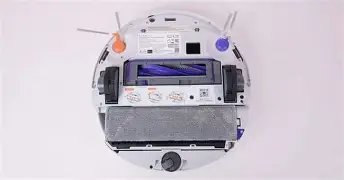
I was sold on the idea of a self-washing mop dock. The Narwal Flow arrived as a large package and the dock is a significant piece of hardware — expect it to take up a fair bit of floor space near a wall outlet. Setup took about an hour for me: filling tanks, installing pads, and calibrating through the app. The documentation was serviceable, but I leaned on in-app walkthroughs and a short online forum thread for tips on getting the mop pads aligned correctly.
Cleaning performance
After testing for several months I can say the Narwal Flow dramatically reduced the time I spent mopping. For everyday living — tracked-in dirt, pet paw prints, occasional sticky spots — it does a very good job. The mop pads agitate and the dock washes them with fresh water and a separate waste reservoir, which was a genuinely nice feature. I noticed my floors looked consistently cleaner when the device ran on a daily schedule.
However, the Narwal isn’t perfect. Heavy dried-on grime required a manual pre-scrub. For example, footprints with sand and dried mud from a rainy day sometimes needed a spot clean after the Narwal passed. The robot also tends to miss very narrow corners and very close-to-wall edges where the mop pad doesn’t fully contact the floor — I still needed a quick swipe with a microfiber cloth in those spots once a week.
Navigation, mapping, and reliability
The navigation was impressively competent. The mapping algorithm made sensible room divisions and allowed me to set no-go zones and selective room cleaning. In my experience, the lidar or SLAM system (the app calls it intelligent mapping) handled my open-plan living area and narrow kitchen doorway without many collisions.
That said, I did encounter occasional docking errors where the robot returned but failed to align perfectly with the dock, resulting in an incomplete wash cycle. Restarting the dock or nudging the robot manually fixed it. After a firmware update during my testing, those alignment failures reduced but did not disappear completely.
Maintenance, consumables, and noise
Maintenance is the trade-off for convenience. Emptying the waste reservoir and refilling the clean-water tank every few days (depending on usage) became part of my routine. Mop pads are reusable and machine-washable, which I appreciated, but I replaced them monthly to avoid smell buildup from heavy use. The dock’s water pumps are audible during the self-wash; it’s not deafening but definitely noticeable if you run a cycle while working in the same room.
What I liked and what bothered me
- Liked: Excellent day-to-day mopping without manual intervention, useful app-driven scheduling, and a genuinely helpful self-washing dock.
- Bothered me: Missed stubborn, dried-on messes; occasional dock alignment errors; upfront footprint of the dock; and non-trivial maintenance (emptying waste tank, replacing pads) that you can’t avoid completely.
Comparison at a glance
| Feature | 8Bitdo Arcade Controller | Narwal Flow |
|---|---|---|
| Primary use | Precision gaming input for fighting/arcade games | Automated mopping and light vacuuming for floors |
| Build quality | Solid plastic with weighty base; serviceable internals | Large, sturdy dock and robust robot chassis |
| Performance | Responsive, low-latency wired; good Bluetooth with minor hiccups | Very good daily cleaning; struggles with heavy dried debris |
| Battery / Runtime | Lasts multiple sessions; charges via USB (depending on usage) | Runs full-room cleans reliably; returns to dock automatically |
| Maintenance | Minimal — occasional cleaning and optional part swaps | Regular emptying of waste tank, refilling clean tank, pad cleaning |
| Software / App | Firmware updates and mapping profiles via 3rd-party/official tools | Feature-rich app with mapping, scheduling, and settings |
| Price/value | Good value for arcade-grade input at consumer price | High up-front cost but replaces frequent manual mopping |
Pros & Cons — Individual summaries
8Bitdo Arcade Controller
- Pros: Authentic arcade feel, responsive buttons/joystick, sturdy build, flexible wired/wireless connectivity, user-serviceable for mods.
- Cons: Minor joystick play after heavy use, isolated double-actuation on one button in my unit, occasional Bluetooth micro-hiccups, cosmetic variation between units.
Narwal Flow
- Pros: Truly reduces manual mopping, self-washing dock is a standout convenience feature, strong mapping and scheduling, reusable mop pads.
- Cons: Misses deeply dried dirt, dock alignment hiccups sometimes, significant footprint for the dock, ongoing maintenance tasks.
Buying guide — Which one should you choose?
These two products solve entirely different problems, so the right pick depends on what you value more in daily life. Below I break down scenarios where each product makes sense.
Looking for the best Electronics deals on Amazon?
Browse Now →Buy the 8Bitdo Arcade Controller if:
- You're a fighting-game player or enjoy arcade-style inputs and want precision that tiny controllers can’t match.
- You host local multiplayer sessions and want a satisfying tactile experience for all players.
- You value the option to mod or replace parts instead of buying a new unit when something wears out.
- You want a compact but durable controller that works wired for latency-sensitive play and wireless for casual gaming.
Buy the Narwal Flow if:
- You hate mopping and want to reduce hands-on floor maintenance significantly.
- You have mostly hard floors (tile, laminate, sealed wood) and want daily freshness rather than occasional deep scrubbing.
- You’re comfortable with a device that needs periodic maintenance (emptying tanks, washing pads) in exchange for daily automation.
- You have storage space for a fairly large dock and prefer scheduled cleaning over instant spot-cleaning.
If you’re on the fence financially, ask yourself which convenience will improve your day-to-day life more: sharper game inputs for hobby-level or competitive play, or taking mopping off your to-do list. Both are justifiable splurges for different reasons.
Final verdict
After several months with both devices, here’s my bottom-line take: the 8Bitdo arcade controller delivered the tactile responsiveness and reliability I wanted for a dedicated fighting setup. In my experience it beat compact pads for precision and felt like a product designed for enthusiasts — with minor cosmetic and long-term-wear caveats that didn’t undermine the experience.
The Narwal Flow, meanwhile, legitimately changed the amount of manual cleaning I had to do. I still ended up spot-cleaning and addressing corners, and heavy grime will always need human attention, but for daily maintenance it is a strongly positive addition. The dock’s size and ongoing maintenance are trade-offs I accepted because it saved me recurring time and effort.
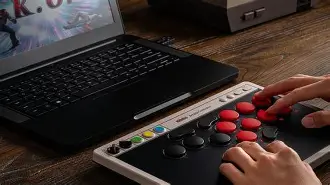
So which one gets my personal recommendation? If you want to keep floors passable without thinking about them and don’t mind a regular maintenance rhythm, the Narwal Flow is worth the premium for the convenience. If you want gaming performance and tactile joy at a good price, the 8Bitdo arcade controller is a smart, satisfying buy. I own both because they solve different parts of my life — one makes my play feel better, the other makes my living space feel cleaner — and I wouldn’t give either up without a very good reason.
Parting notes from my experience
Buying gadgets is always a balance between expectations and real-world wear. In my experience, both products rewarded the initial investment with months of useful performance. Neither was perfect: the controller showed minor mechanical wear under heavy use, and the Narwal demanded routine attention and sometimes failed the occasional dock alignment. Still, both improved my daily life in tangible ways. If you end up choosing either product, set realistic expectations about maintenance and treat both as tools that will be better with a bit of user care.